

If you’ve tried regular keto and felt hungry, lost muscle, or just couldn’t stick with it, you’re not alone. A high-protein keto diet plan solves the biggest complaint people have about standard keto — it keeps you fuller for longer, helps protect lean muscle while you lose fat, and is genuinely easier to follow long-term.
This guide breaks down exactly what a high-protein keto diet plan is, how it’s different from standard keto, a full 7-day meal plan with macros, a grocery list, and the safety information you need before you start. The information here is based on published research and reputable health sources, but it does not replace professional medical advice.
What Is a Keto Diet Plan?
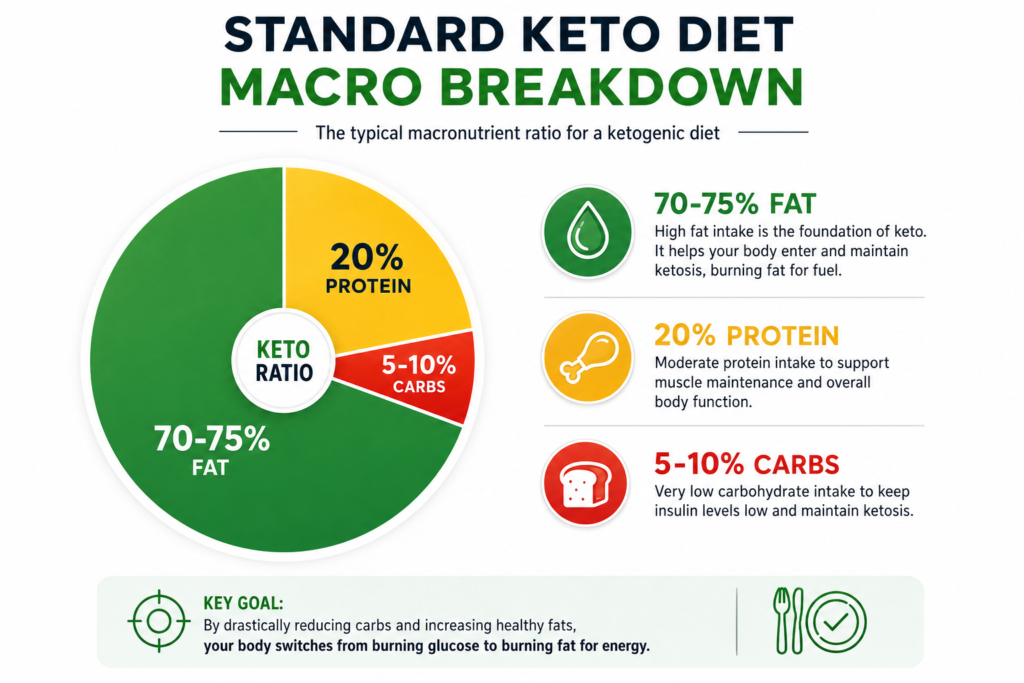
A keto (ketogenic) diet plan is a low-carb, high-fat eating pattern designed to shift your body into ketosis — a metabolic state where it burns fat for fuel instead of carbohydrates. On a standard keto diet, most people keep net carbs between 20–50 grams a day, which is low enough to deplete glycogen stores and push the liver to start producing ketones.
The traditional macro split looks like this:
- 70–75% calories from fat
- 20% calories from protein
- 5–10% calories from carbohydrates
That heavy fat-to-protein ratio works for some people, but many find it leaves them hungry between meals, makes it harder to preserve muscle during weight loss, and is genuinely difficult to sustain at restaurants or with a busy schedule.
High-Protein Keto vs. Standard Keto: What’s the Difference?
A high-protein keto diet plan keeps carbs low (still in ketosis range) but raises protein intake and slightly lowers fat. It’s a small shift with a noticeably different experience.
| Macro | Standard Keto | High-Protein Keto |
| Fat | 70–75% | 55–65% |
| Protein | 20% | 30–35% |
| Carbohydrates | 5–10% | 5–10% |
| Daily net carbs | 20–50g | 20–50g |
| Protein/day (avg) | ~0.6–0.8g/lb | ~0.8–1.1g/lb |
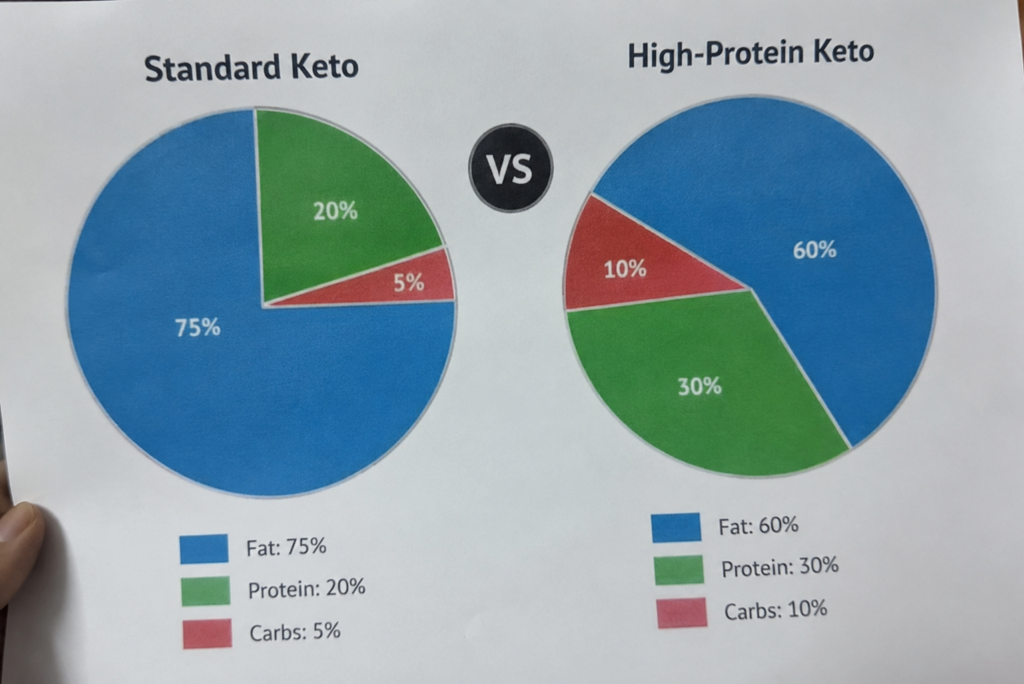
The carb ceiling stays the same — that’s what keeps you in ketosis. What changes is where the rest of your calories come from. Swapping some fat for protein tends to:
- Reduce hunger and cravings (protein is the most satiating macronutrient)
- Help preserve lean muscle mass during a calorie deficit
- Make the diet easier to follow if you’re active or strength training
- Slightly raise your daily calorie burn through the thermic effect of food
One common question is whether eating “too much” protein kicks you out of ketosis. For most people, moderately higher protein intake doesn’t meaningfully disrupt ketosis — the body’s process for converting excess protein into glucose (gluconeogenesis) is regulated by need, not by simply eating more protein. Very high protein intakes combined with very low fat can affect ketone levels in some individuals, which is one reason to monitor how you feel and adjust as needed.
Who Is a High-Protein Keto Diet Plan Best For?
This style of keto tends to work especially well for:
- People who feel hungry or low-energy on standard keto
- Anyone doing resistance training or trying to maintain muscle while losing fat
- Busy professionals who want a plan that’s easier to stick to socially
- People over 40 who want extra support for muscle maintenance as part of healthy aging
- Anyone transitioning from a high-protein or high-carb diet who finds standard keto too extreme a jump
It may be less necessary for endurance athletes or people specifically using keto for certain medical purposes (like epilepsy management), where the higher-fat ratio is part of the clinical protocol — those situations should be guided by a doctor, not a general meal plan.
7-Day High-Protein Keto Meal Plan
This sample plan targets roughly 1,800 calories, 135g protein, 130g fat, and 23g net carbs per day (about a 65% fat / 30% protein / 5% carb split). Adjust portions up or down based on your own calorie needs, activity level, and goals — a TDEE calculator or a consultation with a registered dietitian can help you personalize this.
| Day | Breakfast | Lunch | Dinner | Snack |
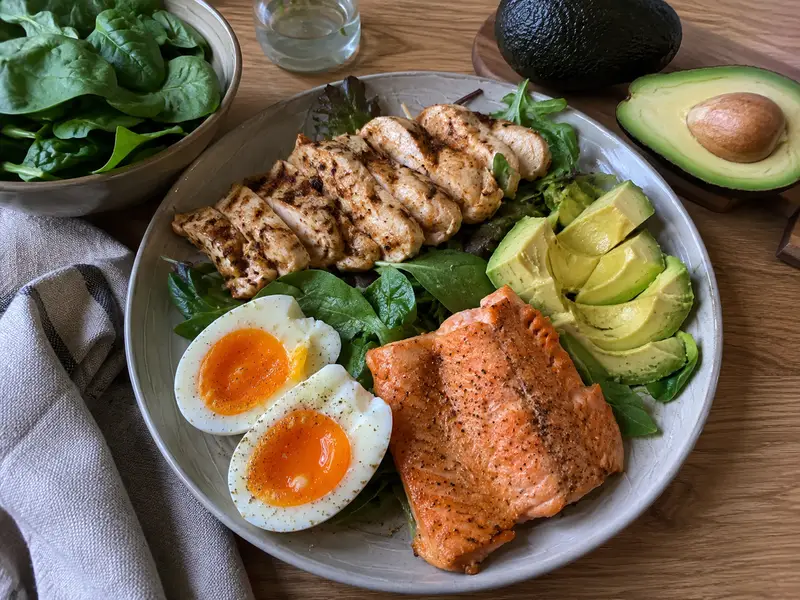
| 1 | 3-egg veggie omelet with cheddar + avocado | Grilled chicken breast over spinach, olive oil dressing | Baked salmon with asparagus and butter | Greek yogurt (full-fat, unsweetened) with almonds |
| 2 | Greek yogurt with chia seeds and a few berries | Tuna salad lettuce wraps with mayo and celery | Ground beef stir-fry with broccoli and soy sauce | String cheese and cucumber slices |
| 3 | Protein smoothie (almond milk, whey, peanut butter, spinach) | Turkey and cheese roll-ups with cherry tomatoes | Grilled shrimp with zucchini noodles in garlic butter | Hard-boiled eggs (2) |
| 4 | Scrambled eggs with smoked salmon and cream cheese | Chicken Caesar salad (no croutons) | Pork chops with sautéed cabbage | Handful of macadamia nuts |
| 5 | Cottage cheese with flaxseed and cinnamon | Beef lettuce wraps with avocado and salsa | Baked chicken thighs with roasted Brussels sprouts | Beef jerky (sugar-free) |
| 6 | Protein pancakes (almond flour + eggs + whey) with sugar-free syrup | Leftover baked chicken over mixed greens | Grilled steak with garlic green beans | Celery with cream cheese |
| 7 | Western omelet with ham, peppers, onion, cheese | Salmon salad with olive oil and lemon | Turkey meatballs with marinara and zucchini noodles | Pepperoni and cheese slices |
Tips for sticking to it:
- Prep proteins in bulk (grill 3–4 chicken breasts at once) to cut weekday cooking time
- Keep 2–3 “backup” high-protein keto snacks on hand (jerky, cheese, hard-boiled eggs) for busy days
- Spread protein across meals rather than loading it all at dinner — this supports better satiety and muscle protein synthesis
Best High-Protein Keto Foods List
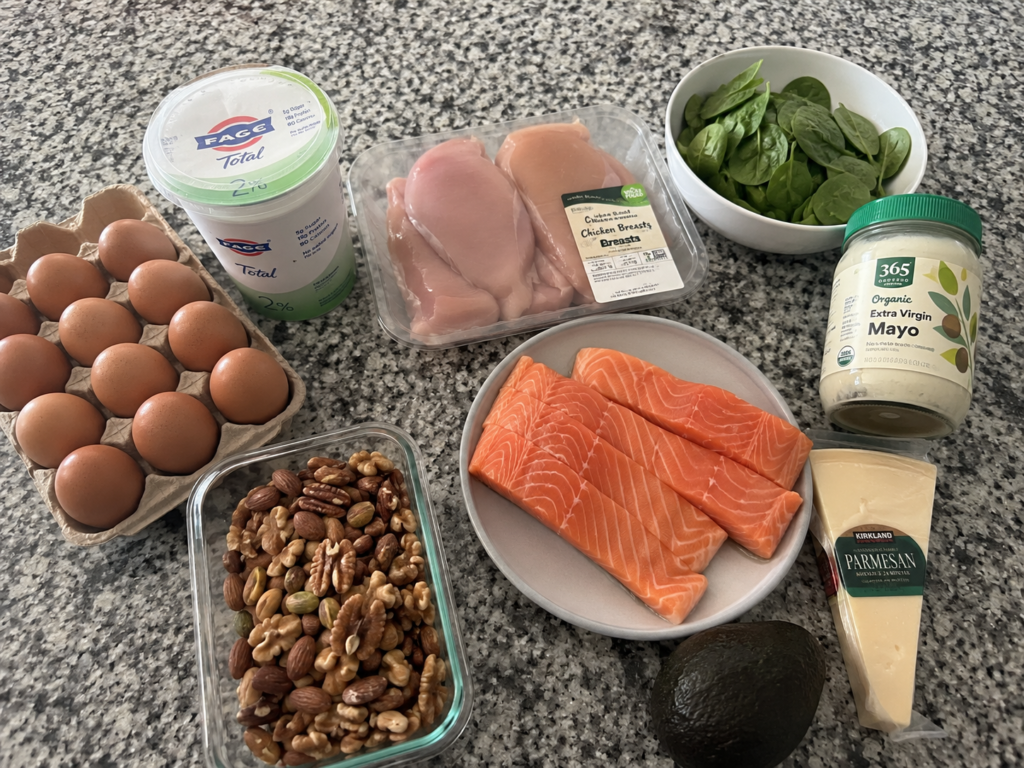
Protein sources
- Eggs and egg whites
- Chicken, turkey, and lean beef
- Fatty fish (salmon, mackerel, sardines)
- Shellfish (shrimp, crab)
- Full-fat Greek yogurt and cottage cheese
- Whey or egg-white protein powder (check for hidden sugars/carbs)
Healthy fats
- Olive oil, avocado oil
- Avocados
- Nuts and seeds (macadamia, almonds, walnuts in moderation)
- Butter and ghee
Low-carb vegetables
- Spinach, kale, arugula
- Broccoli, cauliflower, Brussels sprouts
- Zucchini, asparagus, bell peppers
- Cabbage, cucumber, celery
Foods to limit or avoid
- Bread, pasta, rice, cereal
- Sugar, honey, most fruit (except small portions of berries)
- Beans, lentils, and other legumes
- Starchy vegetables (potatoes, corn)
- Beer and sweet cocktails
Budget-Friendly Keto Grocery List
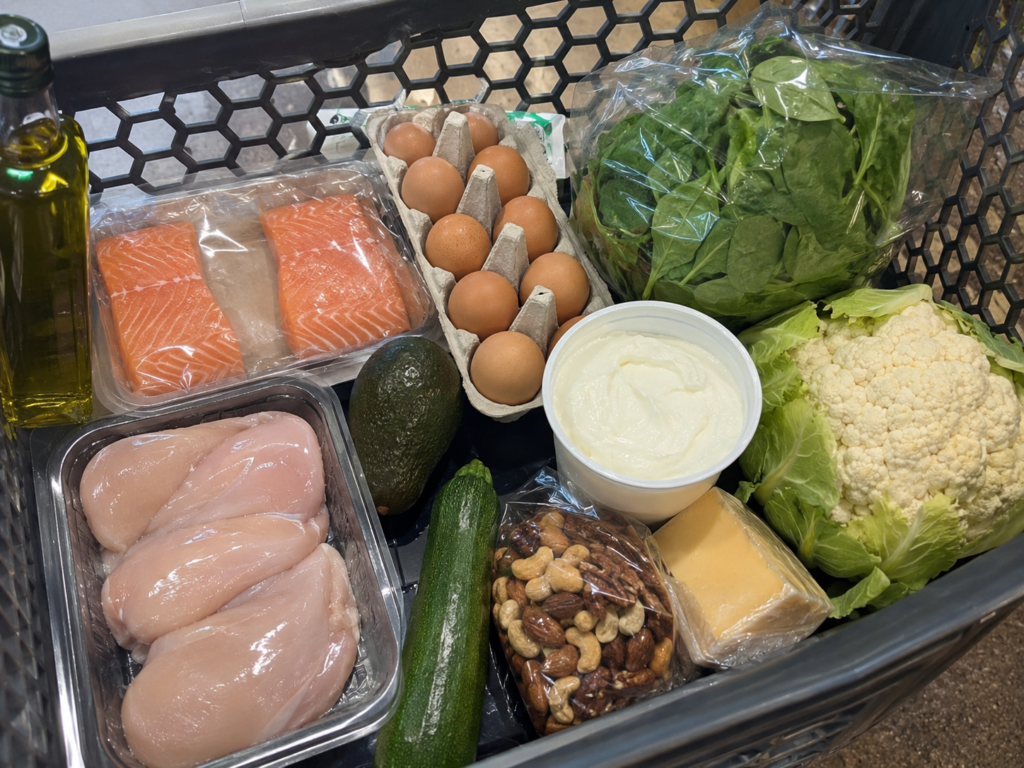
High-protein keto doesn’t have to be expensive. To keep costs down:
- Buy eggs, chicken thighs, and ground beef in bulk — they’re among the cheapest high-protein keto staples
- Choose frozen vegetables and fish over fresh when budget matters; the nutrition is comparable
- Stick to whole foods over packaged “keto” snacks, which are often marked up significantly
- Buy cheese and Greek yogurt in larger tubs rather than single-serve cups
- Plan meals around what’s on sale that week rather than a fixed rotation
Lazy Keto vs. Dirty Keto vs. Strict Keto
You’ll see these terms a lot — here’s the quick distinction:
- Strict keto: Tracks all three macros (fat, protein, carbs) precisely.
- Lazy keto: Only tracks net carbs, without worrying about exact fat/protein ratios. This is the easiest entry point and pairs naturally with a high-protein approach.
- Dirty keto: Stays under the carb limit using processed, low-quality foods (like bacon and processed cheese) without much attention to food quality.
A high-protein keto diet plan works well with the lazy keto approach — track your carbs, prioritize protein at each meal, and let fat fill in the rest, without obsessively counting every gram.
Common Mistakes and the Keto Flu
In the first week, some people experience the “keto flu” — fatigue, headache, irritability, and brain fog as the body adjusts to burning fat for fuel instead of carbs. This is usually temporary and tied to electrolyte and fluid shifts, not a sign that something is wrong.
To minimize it:
- Increase sodium intake (broth, salted foods) in the first week
- Make sure you’re getting enough magnesium and potassium
- Stay well hydrated
- Don’t restrict fat too aggressively while also raising protein — you still need adequate total calories
Other common mistakes: under-eating overall, not planning meals ahead (leading to carb-heavy convenience food), and confusing “keto-friendly” packaged products with genuinely low-carb whole foods — always check the label for net carbs and added sugars.
Who Should Avoid a Keto Diet Plan
A keto diet plan isn’t right for everyone, and a high-protein version doesn’t change that. You should talk to a doctor before starting if you:
- Have kidney disease (high protein intake may need medical supervision)
- Have a history of pancreatitis, gallbladder disease, or liver conditions
- Take medication for diabetes or blood pressure (carb restriction can require medication adjustments)
- Are pregnant or breastfeeding
- Have a current or past eating disorder
- Are underweight or have specific nutrient deficiencies
Emerging research has also raised questions about the long-term effects of very-high-fat ketogenic eating on cholesterol and liver health in some people, which is part of why monitoring with a healthcare provider — rather than following any diet indefinitely without check-ins — is the safer approach.
How much protein should I eat on a high-protein keto diet?
Most people aim for roughly 0.8–1.1 grams of protein per pound of body weight per day, adjusted for activity level and goals. A doctor or dietitian can help you set a precise target.
Is high protein bad for keto?
Not for most people. Moderately higher protein intake doesn’t typically prevent ketosis, since the body only converts excess protein into glucose as needed. Extremely high protein combined with very low fat may affect ketone levels in some individuals.
What’s the difference between a keto diet plan and a high-protein diet plan?
A standard keto diet plan is built around very high fat and low carbs, with moderate protein. A high-protein diet plan, on its own, doesn’t require carb restriction. A high-protein keto diet plan combines both: it keeps carbs low enough for ketosis while raising protein above the standard keto range.
How long should I follow a keto diet plan?
There’s no single right answer — some people use it short-term (a few months) for a specific goal, others maintain it long-term. Periodic check-ins with a healthcare provider are recommended for anyone following it for more than a few months.
Can I build muscle on a high-protein keto diet?
Yes, this is one of the main reasons people choose the high-protein version — adequate protein intake supports muscle maintenance and growth, even in a calorie deficit, when combined with resistance training.
What can I eat on a lazy high-protein keto diet?
Focus on hitting your net-carb ceiling and protein target each day without precisely tracking fat — eggs, meat, fish, full-fat dairy, and low-carb vegetables form the core of most meals.
A high-protein keto diet plan takes the fat-burning benefits of standard keto and makes it more sustainable by keeping you fuller and helping protect muscle mass. It’s not a fit for everyone, and it’s not a substitute for medical advice — but for many people looking for a realistic, livable version of keto, shifting the macro ratio toward more protein is a simple, effective change. Always consult a qualified healthcare professional before making major dietary changes.
Sources
- Mayo Clinic — Low-carb diet: Can it help you lose weight?
- Harvard Health Publishing — Should you try the keto diet?
- Harvard Health Publishing — What is keto flu?
- National Institutes of Health (NIH) — Ketogenic Diet (overview of safety and mechanisms)
Fact-Checking Note: This article has been fact-checked against current scientific literature and the cited references to ensure accuracy. However, it has not been individually reviewed by a medical doctor or dietitian. All health-related content should be discussed with your own healthcare provider.
Medical Disclaimer: This article is for general informational and educational purposes only and is not intended as medical advice, diagnosis, or treatment. It is not a substitute for professional medical guidance. Always consult a physician, registered dietitian, or other qualified healthcare provider before starting any new diet, especially if you have an existing health condition, take prescription medication, are pregnant or breastfeeding, or have a history of disordered eating. Individual nutritional needs vary, and results from any diet plan are not guaranteed.
About the Author: Emily Carter is a health and wellness writer who specializes in making complex nutrition science accessible and practical for everyday readers. Her articles are thoroughly researched and rely on reputable, published sources.